Blog
Dutch industrial production continues to rise despite persistently weak demand
Business conditions in the Dutch manufacturing sector remained challenging in April, with a continued decline in the number of new orders received. Although production volumes did increase, the growth was modest and weaker than in the previous month.
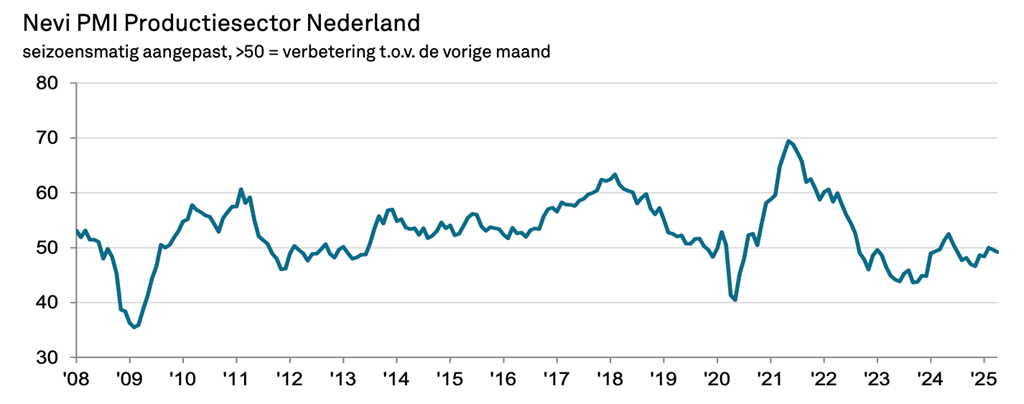
The Nevi PMI® for the Dutch manufacturing sector is a composite indicator that summarises the state of the sector in a single figure. It is based on five components: new orders, production volumes, employment, delivery times and stocks of purchased materials.
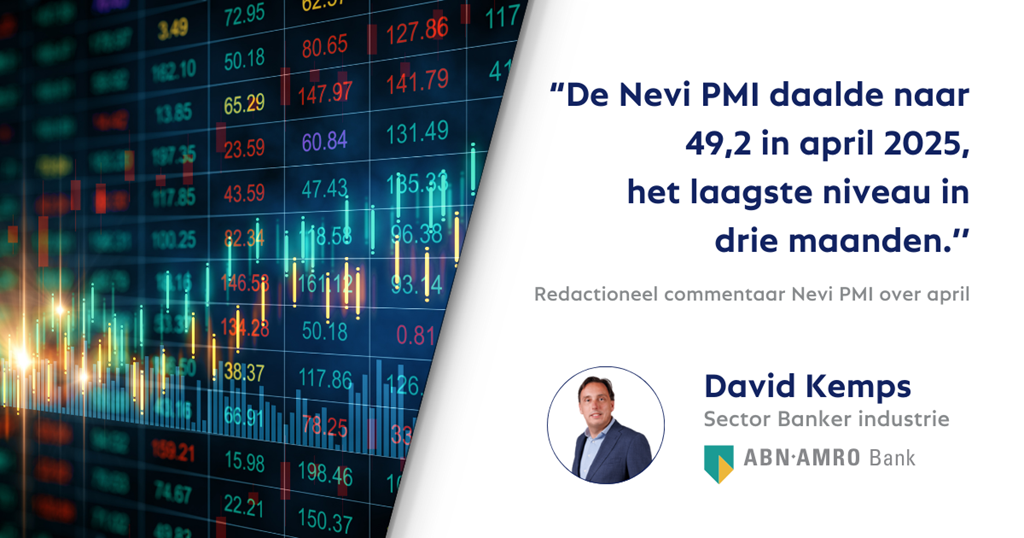
With the exception of a brief period of stability in February, business conditions for Dutch manufacturers have deteriorated every month since July 2024. The headline PMI index fell from 49.6 in March to 49.2 in April, the lowest level in three months.
The decline in the headline index was driven by slightly negative contributions from all five components.
New orders fell for the second consecutive month in April, reflecting stagnant market conditions and geopolitical uncertainty. The contraction was modest, as growth in the investment goods subsector partly offset declines in other subsectors. The latest drop in new export orders was minimal and the smallest in almost a year.
Weak demand also had negative consequences for production volumes. Output increased only slightly and remained below the survey average. Panel members attributed the rise in production to a combination of new customer acquisition, efforts to expand capacity and, to a lesser extent, an increase in new orders.
The lack of new orders led to reduced purchasing activity and efforts to lower inventory levels. This latest decline in purchasing was sharp and the largest so far this year. As a result, stocks of materials fell significantly and to a historically high degree.
One of the consequences of the decline in demand for materials was the stabilisation of supply chains. The lengthening of average delivery times in April was minimal, which panel members attributed to stock issues and maintenance‑related disruptions at suppliers.
A positive development for manufacturers was that the drop in purchasing activity further eased cost pressures in April. Input price inflation remained significant but stayed below the long‑term average, and was the lowest since the start of the year. Panel members who reported price increases generally linked them to higher raw material and labour costs.
At the same time, selling prices rose again as companies attempted to pass on higher costs to their customers. However, selling price inflation was also the lowest seen so far in 2025.
In the labour market, April marked the ninth consecutive month of declining employment levels among Dutch manufacturers. This job loss was substantial and the largest since December 2023. The reduction was mainly achieved by cutting temporary staff and not replacing departing employees. The sharper fall in employment led to a much smaller reduction in backlogs — the smallest in more than two years.
Dutch manufacturers’ expectations for future output remained positive, although confidence was at its lowest level in four months and historically subdued. Despite the impact of the current geopolitical climate on business sentiment, some companies remained hopeful about a recovery in order volumes.
Interested in a Nevi PMI subscription ? Lees meer