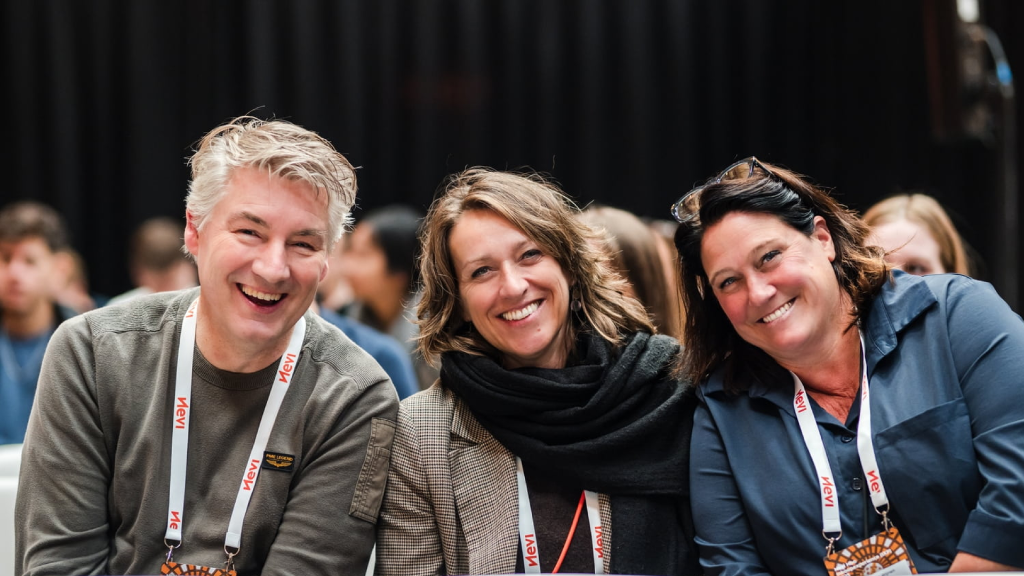
In a world marked by geopolitical uncertainty, economic volatility, technological disruption and growing sustainability expectations, procurement leaders are increasingly finding themselves at the helm of their organizations’ future. This was the central theme of the 5th Nevi CPO Summit, where senior procurement leaders gathered to explore how procurement can successfully navigate today's turbulent waters.
The summit focused on two interconnected navigation challenges facing organizations worldwide: building resilient supply chains and upholding responsible procurement practices. Throughout 24 hours spread across two days, speakers shared insights, experiences and practical strategies, while participants exchanged perspectives on the dilemmas and opportunities shaping the profession.
The first keynote, delivered by Harwin de Vries, explored what businesses can learn from humanitarian logistics. Operating in disaster zones requires organizations to perform under extreme pressure, often in chaotic and rapidly changing environments. De Vries argued that preparation is not merely a defensive measure but a highly profitable investment, with preparedness initiatives delivering substantial returns when crises occur. A key lesson was the importance of balancing structure and flexibility. Organizations need robust planning processes while maintaining the ability to improvise when circumstances change unexpectedly. De Vries also emphasized the role of behavioral design in decision-making. Under stress and time pressure, people are prone to mistakes. Simple tools such as checklists, protocols and decision trees can help teams make better decisions when it matters most.
Drawing on her extensive experience as senior business leader and CPO, Barbara Kux addressed the growing impact of geopolitical developments on global supply chains. According to Kux, businesses are operating in an increasingly regulated and fragmented world where government policies, trade restrictions and tariffs have become major drivers of risk. Rather than viewing these developments solely as threats, Kux encouraged procurement leaders to think positive and see them as opportunities as well, and transform disruption into competitive advantage.
“It’s good business to be a good business.”
Ron Heinen, CPO at IKEA
Resilient seamanship requires strategic foresight, scenario planning and continuous risk monitoring. Above all, she challenged CPOs to maintain calm endurance and adopt a broader business perspective. “CPOs are the CEOs of the supply chain,” she noted, urging leaders to consider how suppliers and supply networks can directly influence business performance and growth.
During the evening program, leadership expert Steffen Giessner shifted attention to a different aspect of leadership: personal presence. He demonstrated how the way leaders present themselves physically influences how others perceive them. Through practical exercises focused on grounding, alignment, breathing and connection, participants experienced how presence can strengthen leadership effectiveness.
The summit’s sustainability perspective was brought to life by Ron Heinen of IKEA. His message was both simple and powerful: “It’s good business to be a good business.” Sustainability, he explained, is deeply embedded in IKEA’s DNA and decision-making processes. Long-term thinking remains a defining principle, inspired by the company founder’s belief in planning for seven generations ahead. Despite ongoing global disruptions, IKEA continues to invest heavily in sustainability capabilities and chooses optimism as a strategic mindset.
“Don’t shrink the size of your goal; grow your capability,”
Caspar Craven, Keynote speaker
The closing keynote by leadership speaker and round-the-world sailor Caspar Craven brought together many of the day’s themes. Drawing on lessons from navigating oceans, he challenged participants to embrace ambitious thinking and resist the temptation to lower their goals when faced with obstacles. “Don’t shrink the size of your goal; grow your capability,” was one of his central messages. Craven emphasized that successful navigation requires a compelling vision of the future, strong team alignment and a culture of continuous learning. He reminded attendees that the best ideas do not always come from the loudest voices and that resilience is built through shared values. When pressure increases, culture reveals itself.
As the summit concluded, one message stood out above all others: procurement leaders can no longer rely on old maps to navigate a rapidly changing world. Building resilience, driving sustainability and embracing continuous learning are no longer separate priorities—they are essential components of future-ready procurement leadership. In an era defined by uncertainty, the organizations that succeed will be those whose procurement leaders are prepared not only to weather the storms, but to chart new courses through them.