
Blog
Dutch manufacturers record first rise in output in nine months
After stabilising in February, Dutch manufacturing firms reported a slight deterioration in business conditions in March. The latest data showed that a renewed increase in production volumes partly offset the modest decline in new orders.
The outlook for output over the next twelve months remained positive, but fell to a level below the long‑term average of the survey.
The Nevi PMI® for the Dutch manufacturing sector is a composite indicator that summarises the state of the sector in a single figure. It is based on five components: new orders, output, employment, delivery times and stocks of purchased materials.
After February’s neutral reading of 50.0, the headline PMI slipped to 49.6 in March, signalling a slight deterioration in business conditions in the Dutch manufacturing sector. With the exception of output, all four other PMI components had a negative impact on the final figure.
Following a modest rise in February, the largest sub‑index (new orders) declined this month. However, the decrease was marginal. The consumer goods and intermediate goods subsectors reported fewer new orders, while the investment goods subsector recorded growth once again.
The fall in total new orders received was partly driven by weaker international sales, which declined further and more sharply in March. According to reports, poorer export conditions were linked to market uncertainty and geopolitical tensions.
At the same time, output increased in March for the first time in nine months, supported by the start of new projects and recent inflows of orders. However, the expansion was limited and remained modest by historical standards.
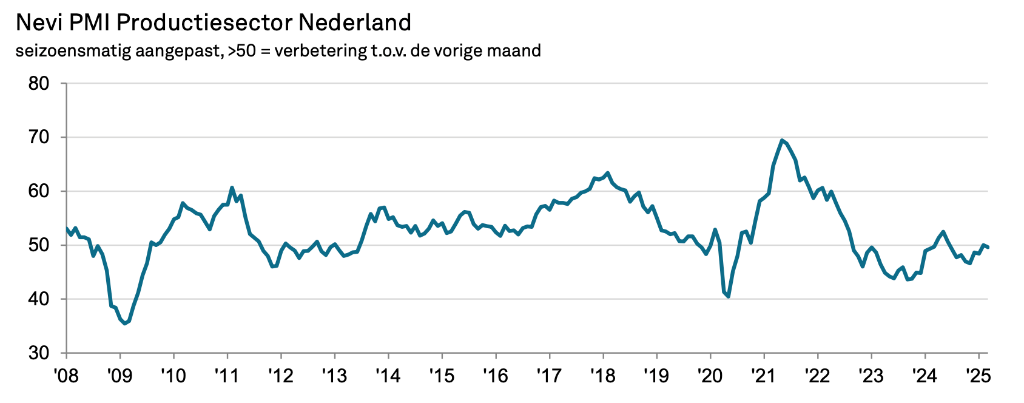
There was another round of job losses in March, marking the eighth consecutive month of decline. The reduction in employment was attributed to voluntary departures and ongoing efforts to align staffing levels with workloads. Backlogs of work fell again at the end of the first quarter, although the decrease was the smallest since June last year. The lower volume of outstanding or unfinished work was largely linked to overcapacity, though some firms also reported improved efficiency.
Higher wage costs likely played a role in hiring decisions as well. Overall operating expenses rose sharply during the survey period, with panel members largely attributing this increase to labour and raw‑material costs. Cost inflation remained slightly below the long‑term average.
Selling prices, meanwhile, were raised significantly — even by historical standards. According to panel members, this increase reflected attempts to pass higher cost pressures on to customers.
Weak demand prompted Dutch manufacturers to reduce both their purchasing activity and their stocks of purchased materials. In both cases, the declines were slightly larger than in the previous month. Respondents often linked the reduction in material inventories to deliberate stock‑cutting efforts.
For the materials that were still being purchased, average delivery times lengthened. Panel members again reported delays, particularly in sea freight. However, the deterioration in supplier performance was the smallest since November last year.
Dutch manufacturers remained positive about the outlook for output. This optimism was reportedly supported by strong order forecasts and plans for capacity expansion. Although the growth outlook stayed positive, it did fall to the lowest level of the quarter.
Would you like a subscription to the Nevi PMI? Lees meer